Category: General

CEC started…

By , October 1, 2006 18:35

Folks,

CEC2006 just started with the state of the union speaches, and I have already been doing work, because I’m on the staff, and partly responsible for the interactive parts of the general sessions. The rooms at Moscone are nicely setup, network (WiFi: CEC2006) also exists, so hopefully, we will get the “participation age” going. Note: I had problems to use Punchin from Solaris there, and might be forced to use Windows with VPN to dial into SWAN, but stay tuned.

With that: Have a great CEC!

tags:

Again, u*Blog on Treo…

By , October 1, 2006 17:18

Aaron did ask in a comment, so here’s the answer:

With blogs.sun.com, and that’s the only one I use currently, it’s fairly simple, as said:

On the right side, you have the “Edit Blog” entry. If you open it, there are a small number of necessary entries:

Name: Your Name to remember on the palm
Type: Select metaWeblog
User Name: Your login into the blogosphere
Password: You should know that… ;-)
Host: blogs.sun.com (for me!)
XML-RPC Path: /roller-services/xmlrpc
Blog ID: Should be the same as your login

Then simply select new Post, write the post (title, and content) and press the 5th image from left at the lower line… ;-)

Again, the french man’s nose…

By , September 29, 2006 20:34

Now, that we have successfully finished the DC-Amb conference, we went for a nice dinner…

Aigle Blanc, Vouvray from 1990, from the Valley of the Loire was the wine that Eric choose as the appetizer.

Nice choice, lets see, what else he will be recommending during the evening…

Sorry, Dave, you missed again…

Moore’s Law and Web 2.0

By , September 29, 2006 17:08

Today we had Hal Stern and Jim Baty present at our DataCenter Ambassador Conference, and I finally got an answer, why Moore’s Law does not need to lead to lower revenue.

My perception during the last years was, that CPUs got faster faster then the need of the software demanded. That led to deminishing revenues, because no-one needed big boxes any more.

But with the advent of all those Web 2.0 services, there again is the need for a.) higher network connections (downloading or uploading of Music, Video and/or pictures) as well as b.) extreme CPU power to handle the services based on top of these elements (for example PhotoShop as a service, send in the picture, describe what you want to have removed (red eye effect) and have some service provider resolve that for you). These services, if successful, do then need way more power in the systems, then are available today in available systems.

As always, there was way more in their presentations, but, that’s why we still invest in research on how to help all these service providers.

Test from my palm Treo 650

By , September 29, 2006 14:40

This is a simple test, I just try to enable myself for online blogging using u*Blog on my Palm Treo 650 so that I can provide fast updates next week during CEC2006.

This is available from: http://www.palmgear.com/index.cfm?fuseaction=software.showsoftware&PartnerREF=&siteid=1&prodID=103568.

The config is obvious, the only tricky part was the usage of the right blogger api (in this case, I do use metaWeblog (produces errors, but works!)) and the XML-RPC Path (/roller-services/xmlrpc) for use with blogs.sun.com.

Stay tuned.

tags:

Back in Blogosphere

By , September 28, 2006 16:10

After a long vacation in Western Canada (will add more to that later), I’m back to the blogosphere.

Currently I’m in the U.S. at our DataCenter Ambassador training, and will be presenting at Sun’s CEC2006 conference next week. I will try to blog about my experiences at the CEC later on, and provide a summary of the findings of the DC-Amb training also later on.

So, this is just a small teaser to prepare you on the things to come.

Meanwhile (between vacation and the trip to the U.S.) I had been involved in re-enabling the so-called ARS (Application Readiness Services) that formerly had been (and again will be) Services to enable our customers to seamlessly get their systems installed up to a stage, where they then can put their application on the systems. Work is well underway, so stay tuned for upcoming global announcements w.r.t. these things (tentativly December 5th).

Solaris/x86 10 03/05 on the old Toshiba Libretto 110 CT

By , July 10, 2006 12:20

As promised earlier, here’s the HowTo and some images of
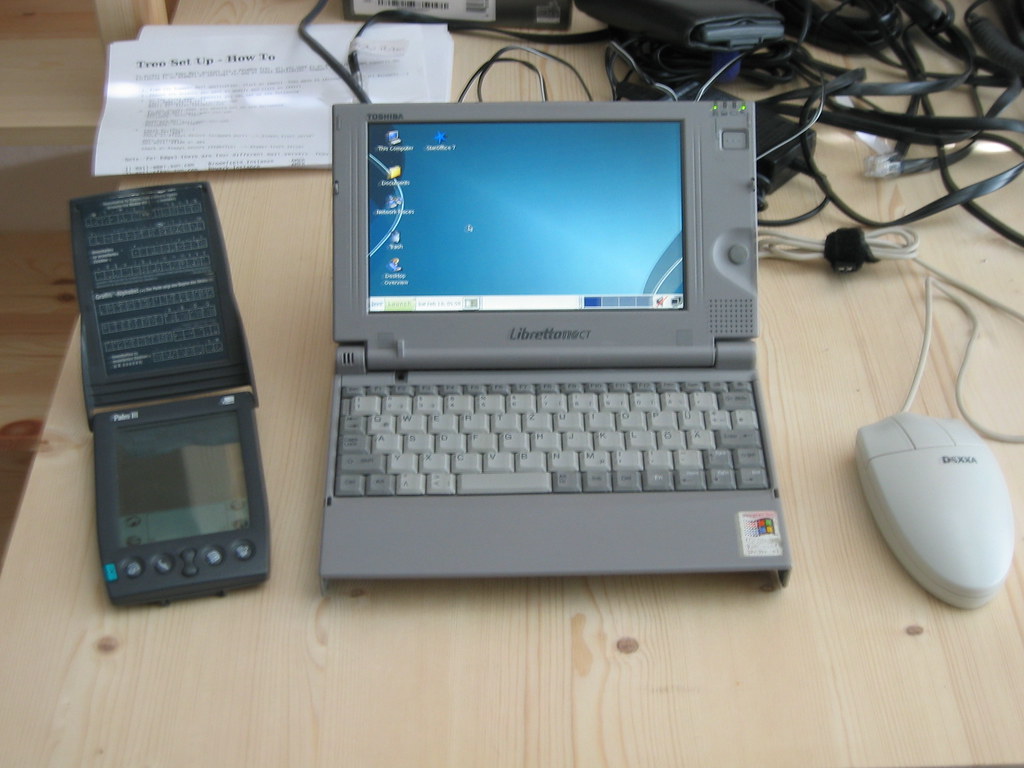
Solaris/x86 10 03/05 running on my old Toshiba Libretto 110CT.
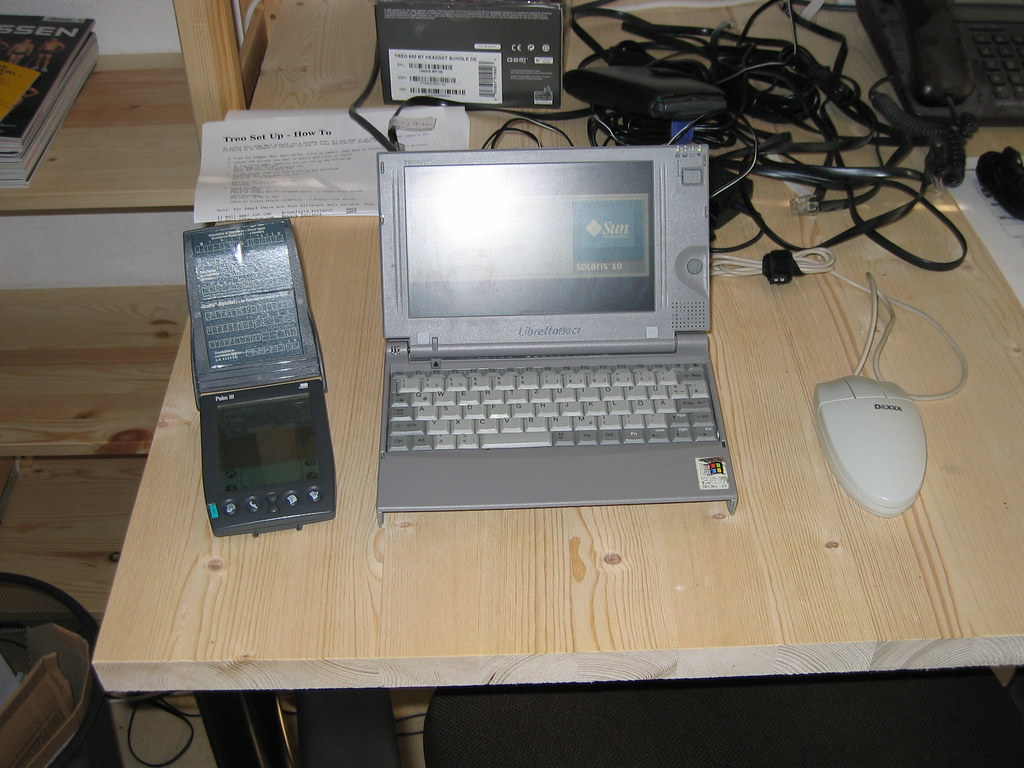


The first thing, you need to be aware of, is the small (and somewhat limited) hardware. It has only (and this is the max!) 64MB of main memory, it has a 233 MHz Pentium CPU. It does have a standard laptop harddisk (which I upgraded long ago to 19GB, to have more storage space, and to be able to run multiple OSes (8GB for Win2K, 5GB for Solaris and 5GB for Linux (which I never really used!)). It does NOT have buildin network, nor buildin modem. Instead it has 2 PCMCIA slots. Tt does have a serial and a parallel port. It does NOT have a floppy, nor a CD drive (these are connected via a proprietary PCMCIA connector). The internal screen is 800×480 pixels. It is connected to an NeoMagic graphics adapter. So, you can imagine, that it is a little bit tricky to get it to install and accept Solaris/x86 10 03/05.

With some ideas and tips from Casper Dik and his description of his installation on a small Lifebook I was ready to go.

I did, just as Casper proposed and so, I just made (OK, some small modifications were needed (and are still needed!), so do not take this literally!):

cd /cdrom/cdrom0/Solaris10/Tools
cp d1_image d1_image.pe3
lofiadm -a `pwd`/d1_image.pe3
mount -F pcfs /dev/lofi/X /mnt
cd /mnt
cd solaris/drivers/isa.125
cp …/pe3.bef .
cd ../../devicedb
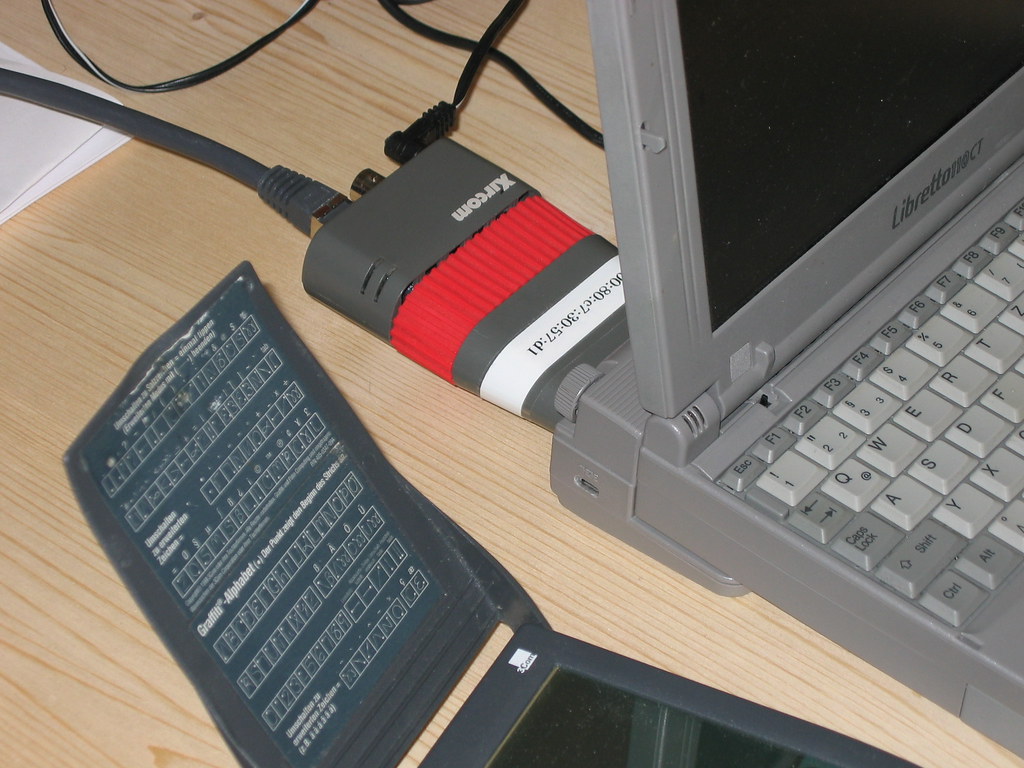
cat ‘PNP8214 pe net all pe3.bef “Xircom Pocket Ethernet parallel port card”‘ >> master
cd
umount /mnt
lofiadm -d /dev/lofi/X

And then copy the image to the floppy (aka “dd if=d1_image.pe3 of=/vol/rdsk/noname”, or similar)

Then you need to create an installserver, because you need to add stuff to the Solaris 10:

cd /cdrom/cdrom0/Solaris10/Tools
./setup_install_server /path/to/your/place

When that is finished, do:

cd /path/to/your/place/Solaris_10/Tools/Boot/boot/solaris/drivers/isa.125
cp …/pe3.bef .
cd ../../devicedb
cat ‘PNP8214 pe net all pe3.bef “Xircom Pocket Ethernet parallel port card”‘ >> master
cd ../../../kernel/drv/
cp …/pe.conf .
cp …/pe .
chmod 644 pe.conf
chgrp sys pe.conf
chmod 755 pe
chgrp sys pe
cd ../misc
cp …/GLD .
chmod 755 GLD
chgrp sys GLD

Then do the

cat “XX:XX:XX:XX:XX:XX” >> /etc/ethers
cat “YYY.YYY.YYY.YYY HOSTNAME” >> /etc/hosts

./add_install_client -i YYY.YYY.YYY.YYY HOSTNAME i86pc

After that, boot from floppy… ;-)

That’s it! It really is that simple!

And be sure: Don’t reboot automatically, because you need to add some stuff before reboot!

Aka:

cd /cdrom/Solaris_10/Tools/Boot/kernel/drv
cp pe /a/kernel/drv
cp pe.conf /a/kernel/drv
cd ../misc
cp GLD /a/kernel/misc
cd ../../boot/solaris/devicedb
tail -1 master > muell
cat muell >> /a/boot/solaris/devicedb/master
rm muell
cd ..
cd drivers/isa.125
cp pe3.bef /a/boot/solaris/drivers/isa.125
cd /a/kernel/drv
chgrp sys pe
chgrp sys pe.conf
cd ../misc
chgrp sys GLD
cd ../../boot/solaris/drivers/isa.125
chgrp sys pe3.bef
chmod 644 pe3.bef
add_drv -b /a pe

So, here’s an image of the PE3:


And here’s the session after the login:


And finally, here are the relevant files, in a tar.gz-file: pe-s10.tar.gz

Virtualization? What’s that? And why? (Update!)

By , June 23, 2006 05:42

Jörg did provide a translation of his article. You can find it here:

Does virtualization solves any substantial problem?

Virtualization? What’s that? And why?

By , June 22, 2006 06:24

Colleagues did start a discussion on the usefulness of virtualization technologies, as available today. Sadly, it’s in german only, so I will summarize here, after providing the links to the blogs:

Summary:

Ingo states, that virtualization today is mainly seen as hardware or server virtualization, and refers to a couple of articles (mostly in english!), that state, that this approach add problems, and does not solve problems, because one needs to learn the abstraction layer also, which adds to the complexity.

He continues, in stating, that this also opens new problem areas, like billing, but also adds complexity to change-, configuration- and release-management. Problems, for example in the billing area: Who does pay for the ressources needed for the virtualization layer?

Jörg adds to this, and states, that Ingo’s approach in describing the problems is too honest. Jörg simply states:

Virtualization as done by tools like VMware simply replace a box by a virtualized box. This solves nothing really important (and, we all know, HW prices keep falling, and only are about 20% (mostly even less!) of the overall costs of “a project”).

So, he continues in stating, that the real problem is provisioning (see my older entries) of SERVICES, and not the SERVERS.

And, once you have put a “model” around the description of your service (aka: you have virtualized the service), you no longer need server-virtualization (or: you can benefit more! You can make better use of the HW), because you are then able to quickly “re-deploy” your service (and not the server!) from one system to a different system (and that can even be a different OS, different CPU-Architecture, you name it!).

Thanks to both, Ingo and Jörg for starting this discussion!

5 Nines?

By , June 22, 2006 05:26

Yesterday I was invited to talk to the “AK Server und Betriebskonzepte” (Work Council Server and Operatingconcepts) from BITKOM on 99.999% availability and how to achieve it.

As this is a cross-industry council, presenters from all other major IT vendors were also present.

We all agreed on a couple of major points:

  • 99.999% availability is achievable
  • 99.999% availability is NOT a technical problem
  • 99.999% availability REQUIRES cooperation/including of people/processes

And, most importantly:

  • Do not talk about 99.999% availability, talk about SLAs, etc.
  • Do not talk about technology, do talk about business impacts, procedural requirements, etc.
  • Do NEVER believe, technology alone (regardless of the technology!) delivers 99.999% availability.

As this was common sense among the participants, the team still considers it a requirement to educate deciders, non-IT-management, consultants on these simple facts. That’s why I added this entry to my blog… ;-)

Panorama Theme by Themocracy